
Patrick Halcrow
Educational Psychologist
Child Psychotherapist
Understanding children.
Strengthening relationships.
Creating lasting change.
My role is to help people to understand a child’s emotional world, behaviour, relationships and individual needs. I help children and the adults who care for them understand what behaviours may be communicating and what the underlying struggles may be. I work collaboratively to create the conditions in which children can feel safe, more understood, and better able to thrive. Lasting change comes through understanding, relationships, and the shared efforts of everyone involved in a child’s life.
Services
-

Psychotherapy
A reliable, safe and confidential space where children and their families can try to understand themselves, their feelings and their relationships. It is an invitation to explore what might be going on underneath a child’s behaviour or family’s presenting concerns, such as hidden worries or confusing feelings that cannot yet be put into words. Understanding a child within or some of the root causes of family struggles can create space for meaningful change.
-
Video Interaction Guidance (VIG)
A therapeutic approach that uses short video clips of interactions between a child and parent/carer (or professional) to highlight what is going well and enhance communication and moments of connection. Healthier relationships improve mental health and well-being for children and key adults supporting them.
-
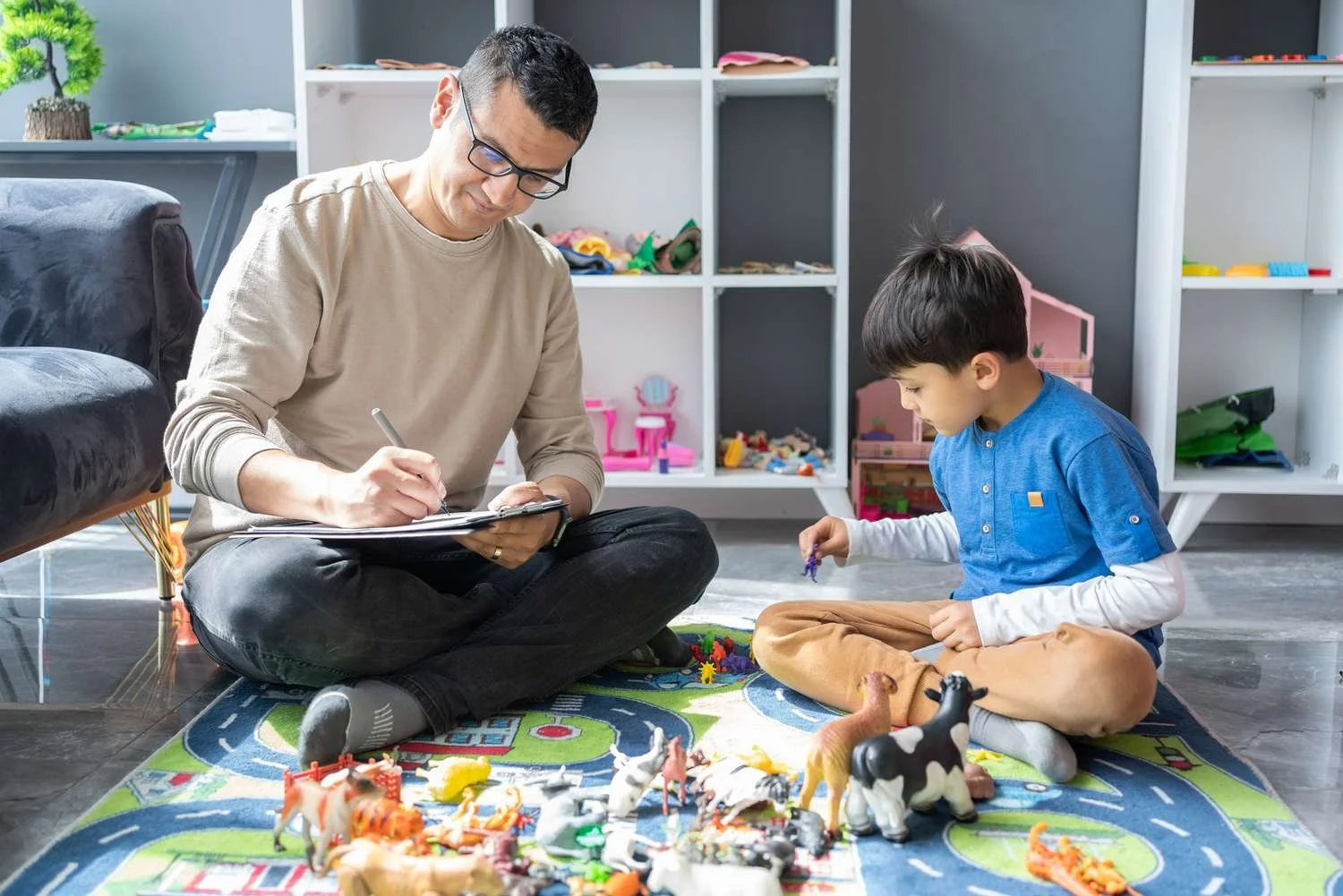
Child & Educational Psychology Assessment
An assessment to understand and support the learning, developmental and psychological needs of children and young people. Practical advice and recommendations are tailored to the child’s unique home and educational context. Involvement is summarised in a report.
-

Training, consultation and supervision
I offer training, consultation and supervision for psychologists, psychotherapists, school staff and other ‘helping professionals’. Bespoke packages of support can be discussed.
Availability updated 25/09/26
Educational Psychology Assessments - available
Psychodynamic psychotherapy - available
VIG - please enquire
Training, consultation & supervision - please enquire
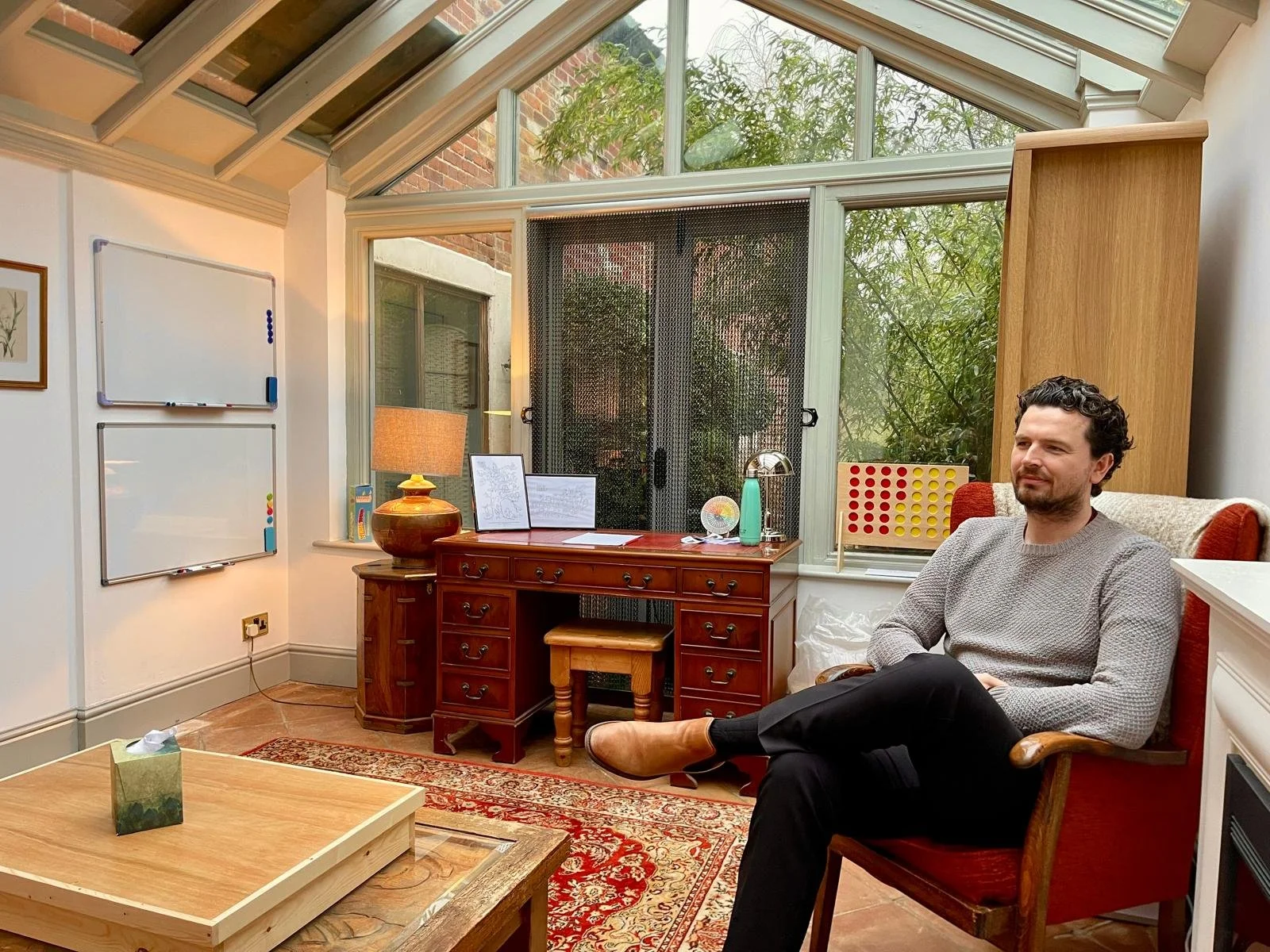
A safe, reliable & confidential space in Arminghall, Norwich.

First steps
Involvement for all services usually begins with an initial 75 minute parent/carer/professional consultation to explore your concerns and consider different support available, including whether the services I offer may be helpful. It is an opportunity to ask questions and for me to explain how I work. Together we can plan next steps. This initial appointment is for adults only. If you would prefer a quick chat first, you are welcome to schedule a free 10-minute call to discuss practical matters. All other enquiries can be made by clicking here.
Sometimes adults are clear what service or support that they require, other times it can be helpful to think this through together.
You can find out what services I offer, how I work, my location and my usual fees on this site. You can also find out more about me by clicking here.
Support for children and young people…

Children and young people can be supported by a range of professionals, each with different training, roles and areas of expertise. Choosing the right professional depends on the child’s needs, the questions being asked, and the type of support required. In many cases there can be overlap between these professional roles or children benefit from collaborative working between professionals. For example, an assessment by a psychologist may help clarify needs before therapy begins or therapy may run alongside educational or medical input.
If you are unsure who is the best fit, an initial consultation or assessment process can help guide the next steps and ensure the child receives the right support at the right time.
Below is a brief guide to some of the similarities and differences between professionals who commonly work with children and young people when there are developmental or mental health concerns.
-
FOCUS: specialise in understanding how children and young people learn, develop, and cope emotionally, particularly in school and family settings. They use psychological assessment, observation, and consultation to understand a child’s strengths and needs, and to provide practical recommendations.
TRAINING & REGULATION: psychology degree and then Doctoral level training; registered with the Health Care Professions Council (HCPC).
COMMONLY SUPPORT: children with disabilities, learning difficulties, emotional and behavioural regulation difficulties, anxiety and self-esteem issues, attendance issues and exclusions, neurodevelopmental differences (e.g. ASD or ADHD).
WHEN MOST APPROPRIATE:
Concerns are about learning, development, emotional well-being or school functioning.
A psychological assessment is needed to understand a child’s profile or why difficulties are occurring in a particular setting or situation.
Adults need clear recommendations to support a child.
-
FOCUS: assess and treat mental health difficulties across the lifespan, although some may specialise in working with children and young people. They use therapies and psychological formulations to understand and support significant emotional and behavioural difficulties.
TRAINING & REGULATION: psychology degree and then trained to Doctoral level; registered with the Health, Care, Professions Council (HCPC).
COMMONLY SUPPORT: people with anxiety, depression, trauma, neurodevelopmental conditions and complex mental health presentations.
MOST APPROPRIATE WHEN:
Mental health difficulties are clinically significant / complex and affecting daily life across settings.
Structured psychological therapy is required.
-
FOCUS: psychiatrists are medical doctors who specialise in mental health. They assess, diagnose and manage mental health conditions, and are able to prescribe medication when appropriate.
TRAINING & REGULATION: medical degree followed by specialist psychiatric training; registered with the General Medical Council (GMC).
COMMONLY SUPPORT: people with severe and complex mental health conditions (e.g. psychosis, severe depression, bipolar disorder); and when medication may be considered as part of the treatment.
MOST APPROPRIATE WHEN:
Medication assessment or management is needed.
Medical oversight is required alongside psychological input.
When mental health risks are high.
-
FOCUS: a child’s emotional development and internal world. Therapy often uses play, creativity and the therapeutic relationship to help children process feelings, relationships and experiences.
TRAINING & REGULATION: post-graduate clinical training (often psychoanalytic or psychodynamic); registered with bodies such as The Association of Child Psychotherapists (ACP), The British Psychoanalytic Council (BCP) or UK Council for Psychotherapy (UKCP).
COMMONLY SUPPORT: children with trauma, loss, relational or attachment difficulties; and when emotional distress is expressed through behaviour or avoidance.
MOST APPROPRIATE WHEN:
The aim is emotional processing in a safe and reliable setting/relationship, rather than assessment or diagnosis.
When difficulties are deep rooted or relate to early relationships or trauma.
A child needs longer-term therapy to process emotions and understand their experiences.
-
FOCUS: provide emotional support through talking therapies, helping children and young people explore thoughts and feelings in a safe and structured way.
TRAINING & REGULATION: usually diploma or degree level; approaches may include person-centred, CBT-informed or integrative counselling; often registered with the British Association of Counsellors & Psychotherapists (BACP) or UK Council for Psychotherapy (UKCP).
COMMONLY SUPPORT: anxiety, low mood, stress, self-esteem difficulties and friendship concerns.
MOST APPROPRIATE WHEN:
Difficulties are mild to moderate or relate to the current situation.
The child or young person can engage in regular talking therapy.
Assessment and diagnosis is not the primary need.